Pages

The Best Mindful Double Pointed Knitting Needles and How to use them

Knitting with Double Pointed Knitting Needles is a science in itself for some. As complicated as it sounds and looks, knitting with 5 needles at the same time is actually not that difficult. Don't you believe it? We would like to convince you otherwise with this blog. But first of all, in general - what are the Double Pointed Knitting Needles used for? Double Pointed Knitting Needles are used for small round projects such as small baby hats, hand warmers or of course, very popular, for socks. The stitches are distributed on 4 knitting needles and knitting is done with the fifth Needle.

Before you start knitting, you need the necessary Double Pointed Knitting Needles. In our Mindful Collection you will find particularly high-quality Double Pointed Knitting Needles made of stainless steel. The needles are particularly durable, strong and never lose their special shine. With our Mindful Collection Double Pointed Knitting Needles you are sure to enjoy them for a very long time. They are available in two different lengths and in a wide range of sizes. Each needle size is provided with a special Inspirational Word, so the needles are not only a knitting instrument but also an instrument of calming and meditation.

The length and size you need depends on your project. If you work according to instructions, the size and length are usually given. If you are unsure, just try knitting with the different gauges to get a feel for it. If you want to equip yourself with the different strengths, the best thing to do is check out our Mindful Double Pointed Knitting Needles Sets. We offer 2 different DPN sets which we would like to briefly introduce to you here.

The Compassion Set

Our Compassion Set contains 6" needles in 5 different sizes. The most commonly used needle sizes are from 3.5 mm to 5.0 mm. These are neatly packed in a beautiful rectangular case and also contain numerous accessories that are packed separately in a pouch. So you are well equipped.

The Grateful Set

This set also contains needles with a length of 6" but in smaller needle sizes. This set is ideal for finer yarns such as lace. This meditative needle set is packed in a rectangular case decorated with a beautiful mandala. This set also contains numerous accessories such as wool needles and different stitch markers.

How to Use the Double Pointed Knitting Needles?

When knitting with double pointed needles, the hardest part is the cast on and the first three to four rows. After that it gets easier. So don't let that put you off. Take your time, be patient and you will surely succeed. The necessary number of stitches is cast on distributed over the 4 needles. Then you start knitting from one needle to the next in rounds with the fifth needle. If you are a beginner and want to make your work a little easier, we recommend not starting the first row with the pattern but simply knitting a row of right stitches. Make sure you keep the tension of the stitches the same and don't knit looser or tighter. This way you have an even stitch pattern. From the second row you can now start with the pattern of the desired work. When knitting socks, this is usually a 2 left 2 right pattern to knit a stretchy cuff that provides a better hold for the socks.

The more rows you knit, the easier it will be. When changing the needles, it is important to always ensure that the thread tension is maintained, otherwise the transitions will become visible. In the first few rows, the transition between the last and first needle will bother you a little as it doesn't close very well, but just ignore that, it's quite normal.

We hope that with our tips you will easily succeed in daring to use the Mindful Collection Double Pointed Knitting Needles and maybe knit your first pair of socks.

You will see a very special knitting experience with our Mindful Double Pointed Knitting Needles. Our knitting needles are not just a knitting instrument, but an instrument of mediation and balance. Do something for your hobby but at the same time do something for your soul and inner peace. You will find yourself filled with happiness very quickly and knitting with these needles will become your daily meditation routine.

"Just one small positive thought in the morning can change your whole day..." - Dalai Lama

All of our needles have an Inspirational Word engraved on them, so our needles provide the daily positive thought to start your day on a positive note. Do something good for your soul and order our Mindful Collection Double Pointed Knitting Needles today.

Do you like this Knitterspride Mindful blog? Do you want to read other interesting things about Knitting? If yes please check our similar blog click here.

Our Range of Circular Knitting Needles at Knitters Pride

Circular Knitting Needles are the most commonly used type of knitting needles. You can use these for both flat and round projects and that is what makes these needles so practical and popular. Circular knitting needles are also suitable for the currently very trendy raglan patterns that are knitted in one piece. Stitches are also less likely to slip off with these needles. The variety of cord lengths and needle sizes makes the Circular Knitting Needles ideal for many types of projects.

 For these reasons, we at Knitters Pride have a large range of circular knitting needles and would like to introduce them to you here in this blog.

 Symfonie Dreamz Interchangeable Knitting Needles

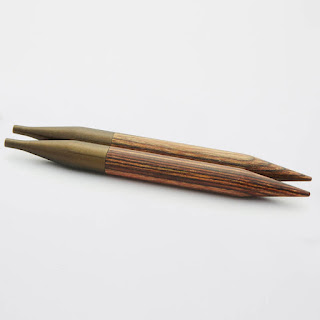
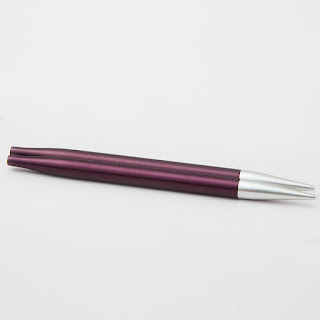
Anyone who loves wooden needles will love these beautifully colored Symfonie Dreamz Interchangeable Circular Needles. As the name suggests, these needles are simply a dream. The perfect finish allows the stitches to slide smoothly from one needle to the other. Cables and needles are perfectly connected so they ensures no snagging and you can knit your projects quickly in your flow.


Symfonie Dreamz Interchangeable Knitting Needles

Ginger Interchangeable

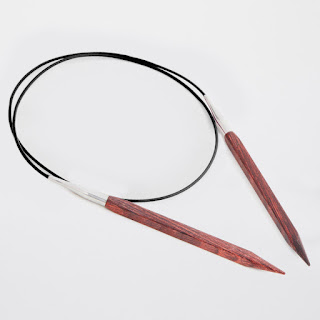
Our Ginger Circular Needles made from beautifully colored birchwood. They are perfect for those who love the warm feel of wooden needles in their hands. Thanks to their perfect finish, they have a beautiful shine and are suitable for all types of yarn.


Ginger Interchangeable

Zing FixedCircular Needles

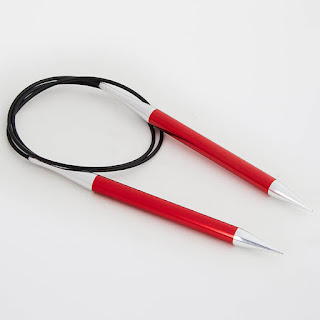
If you prefer metal needles to jingling instead of wooden ones, you will love our color-coded Zing needles. Made from high-quality aluminum, our Zing Knitting Needles are lightweight, strong and comfortable on your hands. They promise hours of knitting experience without any wrist pain. Our Zing Fixed Circular Needles are available in many sizes and lengths. You're sure to find the right ones for your project.


Zing FixedCircular Needles

Karbonz Fixed Circular Needles

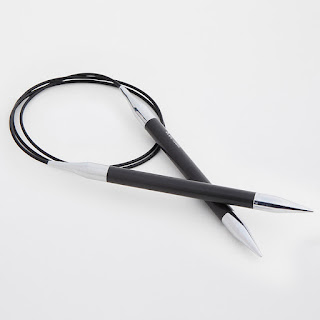
The perfect combination of two such strong materials. Strong carbon fiber knitting needles paired with perfectly formed brass needle tips. In elegant black, these knitting needles are ideal for knitters of all experience levels. Our Karbonz Fixed Circular Knitting Needles are particularly suitable for fine yarn types. With their perfect connection points, they guarantee knitting experiance without any snagging.


Karbonz Fixed Circular Needles

Smartstix Fixed Circular Needles

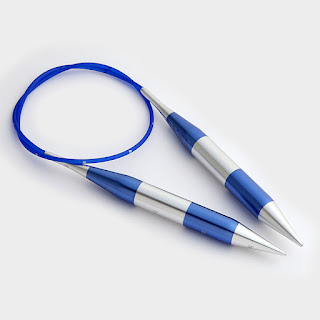
With our Smartstix Interchangeable Knitting Needles you can easily measure your work at the same time as you knit. There is a mark every 2 cm on the knitting needles and also on the cords. Our Smartstix Fixed Circular Needles are available in many sizes and lengths.


Smartstix Fixed Circular Needles

Royale Fixed Circular Needles

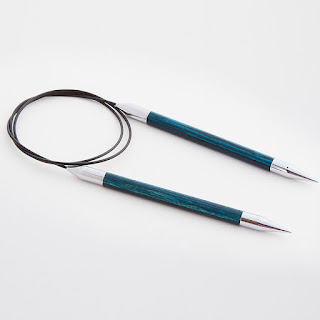
Romantic colors on the finest birchwood. This is how we can describe our Royale Fixed Circular Needles in one sentence. The perfect connection points guarantee a knitting experience without snagging and the flexible and elastic cables without kink or twist.


Royale Fixed Circular Needles

Symfonie Cubics Fixed Circular Needles

The Knitters Pride Symfonie Cubics are our popular Symfonie needles in a cubic shape. These are particularly suitable for Knitters who suffer from arthritis or similar diseases. Thanks to the pleasant grip, our Symfonie Cubics Fixed Circular Needles enable hours of knitting without straining your wrists.


Symfonie Cubics Fixed Circular Needles

Nova Cubics Platinum

If you prefer jingling metal needles in a cubic shape to wooden ones, then our Nova Cubics Platinum Fixed Circular Needles are just the thing. The perfect tips allow for a comfortable pick-up and guarantee long knitting fun without effort and pain.


Nova Cubics Platinum


Zing Interchangeable Circular Needles

Our Zing quality is also available as Interchangeable Circular Needles. So you can easily connect the necessary needle size with the desired cable length and you already have the perfect tool for your next project. If you want to be fully equipped with all needle sizes and cable lengths, we recommend checking out our Zing Interchangeable Circular Needle Sets.


Zing Interchangeable Circular Needles

Bamboo Interchangeable Knitting Needles

Beautiful Bamboo Circular Knitting Needles with 24k Gold Connecting Points. These knitting needles are made from the finest Japanese bamboo, are light as a feather and simply elegant thanks to the golden details. These needles guarantee hours of knitting that you will love.


Bamboo Interchangeable Knitting Needles

Jumbo Fixed Circular Needles

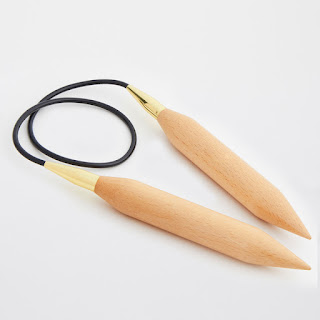
For large yarns you will also need the matching extra large knitting needles. Our Jumbo Fixed Circular Needles are the perfect tools for this. Our Jumbo Circular Needles are available in different strengths and different cable lengths.

Jumbo Fixed Circular Needles

If you like working with thicker yarns, we recommend our Jumbo Circular Needles Sets.

You can also find many of our Fixed Circular Needles or Interchangeable Knitting Needles as practical sets. So you can stock up on the most used lengths and sizes and are well prepared for every knitting project. Check out our wide range of Circular Needles today and open up the endless creative world of knitting. Shop your very favorite circular needles at Knitters Pride.

"Nothing is more powerful than an idea whose time has come" Victor Hugo

When you feel it's time for your ideas too, don't wait any longer - at Knitters Pride, pick your tools, grab your yarn and make all your ideas come true.

Do you like this Knitters Pride blog? Do you want to read other interesting things about Knitting & Crochet? If yes please check our similar blog click here.

How to Select Knitting Needles for Beginners?

Every beginner knows this question; which knitting needles are the best for me? What choices should I make and what should I pay attention to? There are knitting needles in abundance, like Single Pointed Knitting Needles, Circular Knitting Needles, Double Pointed Knitting Needles or Interchangeable Knitting Needles. But these differ again in thickness, length and material, for example they can be made of bamboo, aluminum, steel or acrylic.

As you can see, with such a large selection, the decision is really not easy. With this blog entry today we would like to introduce you to some of the knitting needles that are suitable for beginners and give you tips on what to look out for when choosing your knitting needles.

First of all, we would like to introduce the different types of needles


Interchangeable circular needles

The Interchangeable Circular Needles are particularly suitable for round projects, so if you are a beginner and want to knit your first hat or loop, then this type of knitting needles is just the thing you need. The circular needles are easier to use for beginners, like the double pointed needles, which are also very often used for round projects. The needle tips can be connected to the appropriate cable lengths, so you have the right needle ready for every project. Take a look at our Interchangeable Circular Needles Sets.


Single Pointed Needles

The classic knitting needles with a blocker at the end, which are very well known to many, are a popular choice for beginners. By simply rowing back and forth, you can knit simple models and thus expand your knowledge. The Single Pointed Needles are suitable for flat projects such as scarves, blankets or pillow cases. You can find the Single Pointed Needles in many different sizes on our website. Take a look at our wide range and order your favorite knitting needles.

But the question now is, which type of needles do I use as a beginner? That depends entirely on your project, let's first clarify what you want to knit. Is it a well-rounded project like socks, loops or hats? Then you should prefer our Interchangeable Circular needles. Is it a scarf, a blanket, or maybe a pillow case? So, you should choose single pointed needles. Our Mindful Collection Needles are made of sturdy steel, yet are light as a feather and lie comfortably in your hands. The steel needles are durable and do not lose their shine for long years. Did you know that the jingling of steel needles has a calming effect? So you can create your works and relax at the same time. This is yoga for your soul.

We very much hope that this article has helped you to choose your knitting needles. You can find the best knitting needles that suit your needs at our Mindful Collection. Also you can find a lot of Sets, with which you as a beginner are perfect equipped. Now you know how to find the best needles to begin, so don’t wait, buy your Mindful Knitting Needles and start knitting.

How do I find the Perfect set of Knitting Needles?

The tool you will hold in your hands for hours on end is of utter importance for the knitting process, of course. We all experienced getting frustrated, when realizing we had chosen the wrong set of needles. The yarn kept either slipping over the top, or worse, the sharp points pinched into the loosely spun wool instead of elegantly sliding beneath the thread.

So, what type of knitting needles do I choose for which project? The answer is not a simple and straightforward one, unfortunately, and can become a daunting task when you are left on your own. The perfect type of knitting needle depends on your type of project. 

As in any other activity, there is one rule which applies to the knitting craft, too: the more experience you have, the bigger your confidence will become. Once you have tried out various options, you will automatically find that your hands are more comfortable with one or the other type and style of needle. At one point you will reach for the right tool with the certainty of a sleepwalker, but you should familiarize yourself with the different options on your plate, first.

When choosing your weapons, it's the type of yarn which determines the thickness or diameter a knitting needle should have. Luckily most patterns indicate the size of needle to be employed either in metric or US size.

You can find needles not only in different shapes, they are also made from different materials, i.e. wood or bamboo, aluminum or steel or a combination of everything.

Most knitting enthusiasts find wooden and bamboo needles perfect when working with smooth yarn. You can progress at your own speed, the yarn is secured and will not slip and slide over the needle top. Also, you can take them on a plane, which is very convenient when you travel a lot.

Aluminum needles are the most common material. They are just so light and easy to use, and will also allow you to progress at a faster speed, as the yarn will slide more easily over aluminum than it does over wood. They come with the tendency to bend easily, though; especially, when you work tighter loops.

Steel needles are the most durable needles and will speed up your WIP even more. They are loved by those who work a lot with loosely spun yarn or double coated wool, as these yarn types may get stuck on a wooden needle.

Once you have got your head around what material your ideal knitting needle should be made from, you can start choosing the best suited needle style for your dream project.

Here is an overview of the different knitting needles and the projects they are best suited for.

Circular knitting needles

These are basically two knitting needles and a cable holding them together. They can be found in different lengths, thicknesses and designs.

Circular knitting needles provide a great deal of flexibility and freedom. You can use them to elaborate round knitting shapes and tubes, but also for straight lines, and especially for bulky items such as scarves and blankets.

When choosing circular knitting needles, the whole project is evenly balanced on the cable; you may find that you progress faster and with less effort; the work is better organized, and the thread does not come off so easily. For larger WIPs, like sweaters, jackets or blankets, circular needles are just ideal, as they help you secure the growing, weighty project comfortably in your lap, while your hands are only burdened with a small fraction of it. The slings are better protected. What's more, you don't have to worry about losing a needle when knitting outdoors on the train or in a park.

However, if you opt for these needles, make sure your projects are of a bulkier size, or you have a sufficiently large number of loops cast on. Although there are circular knitting needles with short cables, you will find them terribly uncomfortable for your seamless socks or baby hat projects. The smaller and shorter the cable between the needles, the more restricted your hands are able to move. When you choose to knit seamless, round projects like snoods or hoods with your circular needles, make sure that the transition between needle and thread runs smoothly, otherwise the wool cannot properly flow over it. You would have to keep making constant amendments during the process, which will eventually slow you down.

Double pointed needles

Double pointed needles or dpns usually consist of five needles, although you may find knit patterns which only use three needles to create a round shape instead of four.

Both ends of the needle are open. Usually four needles hold the knitted part and one needle is used for processing. The working needle removes the stitches from one needle at a time. As a result this needle then becomes the next working needle.

Double pointed needles are, of course, available in different lengths and thicknesses as any other type of needle. In some cases, e.g. for very bulky projects, it is best to replace them by circular knitting needles, as the stitches may fall off otherwise. Dpns are your needle set of choice when it comes to sock knitting or any kind of smaller tubular shapes, like stuffed animals.

Straight needles

Straight needles are the most traditional knitting needles, yes, the Looney Tunes cartoon type of needles. Straight needles come in pairs, and they are 7 inches or longer and come with a block on one end, preventing your work from coming off. They are comfortable for smaller, flat and straight items like baby blankets or scarves, just anything that is not bulky and heavy to tire or weigh down your hands. This style of knitting needle is great for newbies to the craft as it allows for working one row at a time.


How Knitting Relieves Stress

Let’s be honest; this after this year we could all use some stress relief. There are many ways to blow off steam but knitting is especially effective in reducing stress. Not only does knitting give the knitter something to focus on to get out of their head, it actually reduces the level of the stress hormone cortisol. A reduction in stress hormone is just as good for your mental health as it sounds but the benefits don’t end there. Knitting also triggers the release of serotonin and dopamine in the brain, chemicals which result in satisfaction and happiness. Serotonin and dopamine are often called natural antidepressants for their importance in brain chemistry. Increased mood and self-esteem have been reported by many knitters. The two-pronged effect of busy hands and a busy mind helps to banish anxiety and take attention from pain and stress. Research shows that the brain reacts to knitting very similarly to yoga and meditation, boosting focus and lowering heart rate and blood pressure. Meditation, yoga and knitting all cause the same type of brainwave pattern, proving their deep similarity in effect on the mind and body.


Color and texture can impact stress as well, with colors like blue and green causing a relaxing effect and reds and yellows an energizing one. Teal embodies serenity and renewal and is an ideal color for creative spaces. Surround your craft space with colors and images that make you feel at ease. Consider keeping a house plant at your workspace, houseplants have been found to increase people’s creativity and reduce stress just by existing in a space! Some find that a highly decorated workspace inspires them while others prefer a simple space to aid in focus. Experiment with what works for you to create your perfect craft space. Lighting a candle and brewing some tea will activate the senses with scents to create a relaxing atmosphere. Scents like chamomile and lavender are especially relaxing for many people. Always keep a close eye on an open flame when you are working with yarn! Finally, consider creating a knitting playlist with your favorite music to knit to. Instrumental music is a favorite for mindful knitting because it lacks distracting lyrics. You may even find yourself knitting to the beat.

Once you have the perfect workstation, knitting can lead to mindfulness and a mental state called “Flow”. The flow state is commonly called being “In the Zone” and is the result of practice and attention. People who experience the flow state describe it as energizing and fulfilling, making them feel competent and productive. Flow and mindfulness are quite similar, and both are stress relieving. The repetitive rhythmic action of knitting stimulates multiple areas of the brain allowing the knitter to use their mind while their hands are busy. Many people choose to use that brain power to knit with others and socialize which boosts mood and helps build community. Having a good community to interact with reduces anxiety and aids in forming meaningful friendships.  If the knitter chooses instead to turn the mind inward to practice mindfulness there are many benefits. This kind of mindful knitting is considered the most relaxing and can help people organize and process thoughts as well as reduce stress. 


If knitting is still difficult for you and doesn’t feel relaxing simply know that the more you practice the more easily your stitches will flow. The road to mindful knitting begins with a single step and every step on the path brings you closer to the mental and physical benefits of mindfulness. Like yoga and meditation, no one is an expert overnight. Practicing for a short time each day will build your skills and before you know it you will be able to “Zen out” while you knit. Experienced knitters and beginners alike can choose patterns based on difficulty to control how relaxing a project will be. Start with a simple pattern in one to two colors and large swatches of one type of stitch. These will be the most consistent and relaxing. A higher level of challenge can be frustrating in the short term but results in immense satisfaction when the difficult project pays off.

Need some inspiration? Here are three free patterns to try knitting mindfully:


https://www.ravelry.com/patterns/library/holey-square-shawl

Knitting & Crocheting with Yarn Scraps: Tips & Pattern Inspiration

Even in just a few short years, the average knitter or crocheter can accrue a surprising amount of yarn scraps. Those leftover bits of yarn from past projects never seem to be big enough to make a project all on their own, but when you combine them with other oddballs, something magical can happen! On this post, we'll share 3 time-saving tips for knitting and crocheting with leftover bits of yarn along with some great free patterns to knit and crochet with yarn scraps! 

Tip #1: Keep a kitchen scale handy.

A kitchen scale can be an invaluable tool for using up every little bit of yarn! Start by measuring the weight of your yarn(s) in grams before you begin knitting or crocheting - then, weight the yarn as you work to see how many grams are needed to complete a pattern repeat, row, or other motif. You can use this information to predict when to change yarn colors, as well as determine whether or not you have enough yarn to finish the section you're about to work on (or are currently working on). While going by yarn weight is not 100% accurate, it allows you to make an educated guess, especially when you don't know the exact yardage of the yarn you're working with.

Tip #2: Sort yarns by weight. 

Chances are, you've lost the labels for most of your leftover bits of yarn. Even if you remember which yarn is which, it's still a good idea to measure the weight of each yarn you plan to use to make sure it will work in your pattern. Here's an easy way to measure your yarn using our SmartStix needles (you can also use a ruler or a special tool called a Wraps Per Inch (WPI) tool): gently wrap you yarn around the needle until an entire 1" section is covered, as shown below. 


Then, count the number of times you wrapped your yarn around the needle. This number is the Wraps Per Inch for your yarn, and you can use it to determine the weight of the yarn by matching the number to the corresponding weight on this chart.

Tip #3: Weave in yarn ends as you go.

The one downside to making a project with lots and lots of yarn bits is all those ends you have to weave in later - luckily, there are some ways to do this as you work! We recommend experimenting to see which technique works best for your project, but once you find something you like, it can be a real time saver! 

If you need to join the same color (or similar color) of yarn, try using the split splice or Russian join method. This video tutorial from Very Pink Knits shows how to weave in ends on the back of your work as you knit, and is a great choice for striped projects. Crocheters can use this clever technique for working in yarn ends as you go.

Scrappy Knitting Pattern Inspiration

Do you have a lot of yarn scraps and don't mind a long-term project that could take months or even years to complete? Check out these free patterns for eye-catching blankets: the Stained Glass Blanket, which is a series of video tutorials from Ladybug Laboratory or the Sediment Scraps Blanket by The Knitty Professors. If you prefer a smaller project, there are still plenty of great options for using up leftover bits of yarn, such as the Mash It Up hat by Babs Ausherman or the Hygge Hat (Ravelry) by Petra Black; Linus by Annett Cordes or Shockwaves by Beata Jezek; Blender Socks by Heather Sebastian or Scrap Bag (Ravelry) by Frankie Brown. 


Scrappy Crochet Pattern Inspiration

We know that a lot of crocheters enjoy making granny square blankets with their leftover scraps, but when you're ready for something a little bit different, check out the Scrappy Corner to Corner Blanket by Cintia Gonzalez, Neat Ripple by Lucy of Attic 24 or A Spicier Life Blanket (Ravelry) by Sandra Paul, all of which are available for free. For smaller stash-busting projects, try these free patterns: Magic Monday by Brenda Grobler, the Nobody's Perfect Shawl by Potter & Bloom, the Scrappy Granny Shawl by Regina Weiss, the Scrap-busters Hat by Jenna Wingate or the Scrap Yarn Basket by Cintia Gonzalez.


We hope you feel inspired to use up your scrap yarns this fall - make sure to share what's on your Knitter's Pride needles and hooks by using #knitterspride in your posts!

Yarn Substitution Tips

Have you ever wondered what happens when you use a different yarn than the pattern calls for? Depending on the type of yarn you are using, your project could be larger, smaller, drapier, denser, or (if you're lucky!) the same as the sample using the specified yarn. Today, we'll talk about the effects of gauge, fiber content, and color usage when substituting yarn in any pattern.

Gauge Considerations

When substituting yarn in any pattern, it is critical to knit a gauge swatch before you do anything else! Even if a yarn is labeled as the same weight as the called-for yarn, it may behave differently when you knit with it. Make sure that your swatch is large enough to give you a sense of the fabric you'll be creating, and you'll also want to block it in the same manner you plan to do with the finished piece, whether it's hand washing in your favorite wool wash, spray blocking, or steaming.


When measuring your gauge, count the stitches and rows in a 4-inch area in at least 3 different spots on your swatch, then take an average of those numbers to calculate your actual gauge in 4 inches. This will give you a more accurate measurement overall, since it's likely that every single stitch isn't uniform (after all, that's what gives a hand knit item character!). Our Elephant Needle Gauge has a handy 4-inch window to make counting those stitches easier!


If your gauge is too small, try going up a needle size. If your gauge is too large, try a smaller needle size to get the required number of stitches and rows. If you are still having trouble getting the required number of stitches or rows, you may need to pick one of your gauge swatches and do a little bit of math to figure out how the difference in gauge will affect your finished piece.


Fiber Content

If you plan on substituting one yarn blend for another of the same yarn weight, your gauge swatch will also come into play here. How a specific fiber or blend of fibers behaves in a knitted piece is a very vast discussion, so we'll use a few visual examples here. Both of these projects used an eyelet stitch design and was knitted with fingering weight yarn; however, each yarn has a different blend of fibers, which produces a different level of drape and stitch definition:


Sample #1: Rochambeau Cowlette by Carina Spencer, knit in Forbidden Fiber Co. Babel Sock, a blend of 70% wool, 20% yak and 10% nylon. 


Original Sample: knit in The Plucky Knitter Primo Fingering, a blend of 75% merino wool, 20% cashmere and 5% nylon.


Sample #3: Starshower by Hilary Smith Calais, knit in Apple Tree Knits Plush Merino Gradient, a 100% merino fingering weight yarn.


Original Sample: knit in Anzula Nebula, a blend of 84% merino and 16% stellina.


Even when using the same stitch pattern or design, you can create a different look just by changing up the yarn! 


Color Usage

Some knitters are nervous about using different colors than what's used in the sample, especially for patterns requiring multiple colors of yarn. Having a basic grasp of color theory can help you make substitutions with confidence, so we’ll give you a quick rundown here: 


Shown here is the color wheel, which is made up of three main colors: red, blue, and yellow, known as primary colors. In traditional color theory, primary colors are the 3 pigment colors that can not be mixed or formed by any combination of other colors. All other colors are derived from these 3 hues.

Secondary colors are created by combining the primary colors. For example, Red+yellow=orange, yellow+blue=green, and blue+red=purple.

Tertiary colors are formed by mixing a primary and a secondary color (for instance, yellow-orange or red-purple). 

Here are 4 simple ways you can use the color wheel to create pleasing color combinations: 

  1. Analogous colors are any three colors which are side by side on the color wheel, such as blue-green, green, and yellow-green. 

  2. Complementary colors are any two colors which are directly opposite each other, such as red and green, or yellow-green and red-purple. Typically, one of these colors is used more than the other two to create a color dominance.

  3. Triadic color schemes use colors that are evenly spaced around the color wheel - for example, orange-red, yellow-green, and blue-purple. When using a triadic color scheme it’s important to balance the colors thoughtfully.

  4. The split-complementary color scheme is a variation on the complementary color scheme. In addition to the base colors, it uses two colors adjacent to its component. A sample split-complementary combination would be red, yellow-green, and blue-green (instead of red and green). 

For patterns requiring sharp contrast (for example, in stranded colorwork or mosaic knitting), here’s a quick trick for testing your chosen palette to see if they have enough contrast between them: take a photo of all the yarns together…


And then switch the photo to monochrome: 


If you can see distinct differences between each skein with the color components removed, you know that you’ve created a palette with enough contrast to look great in the finished project. 


We hope this post inspires you to "think outside the box" and perhaps even color outside of the lines with your next knit or crochet project. 


Like this post? Pin it!